
Why Everyone With Anxiety and Depression Is Talking About DBT (And You Should Too)
- Eugene Whitten
- Nov 18, 2025
- 4 min read

If you've been scrolling through mental health conversations lately, you've probably noticed something: DBT keeps coming up. And for good reason. Dialectical Behavior Therapy is changing the game for people struggling with anxiety and depression, offering something that traditional talk therapy sometimes misses: practical tools that actually work when you're in the middle of an emotional storm.
So what's all the buzz about? Let's break down why DBT has become the go-to therapy that everyone's talking about, and more importantly, why it might be exactly what you need.
What Makes DBT Different from Everything Else
Unlike traditional therapies that focus mainly on changing your thoughts, DBT takes a different approach. It acknowledges that sometimes you can't just "think your way out" of intense emotions. Instead, it teaches you how to handle those overwhelming feelings when they show up: and they will show up.
The genius of DBT lies in its core philosophy: the balance between acceptance and change. You're not trying to eliminate anxiety or depression completely (because let's be real, that's not always realistic). Instead, you're learning to coexist with difficult emotions while building the skills to respond to them differently.
This isn't about suppressing how you feel or pretending everything's fine. It's about developing genuine emotional resilience.

The Research That's Getting Everyone's Attention
Here's where things get really interesting. The numbers behind DBT are pretty impressive. Research shows that over 60% of people experience significantly fewer depressive episodes after DBT treatment. For anxiety, studies reveal that DBT improves executive function, basically, your ability to think clearly and make good decisions when you're stressed: more effectively than some other therapies.
But it's not just about the statistics. What researchers are finding is that DBT creates lasting changes. People aren't just feeling better temporarily; they're developing skills that stick around long after therapy ends.
The therapy has been tested across different populations and conditions, showing effectiveness for everything from generalized anxiety disorder to treatment-resistant depression. That versatility is part of what makes mental health professionals so excited about it.
The Four Game-Changing Skills Everyone's Learning
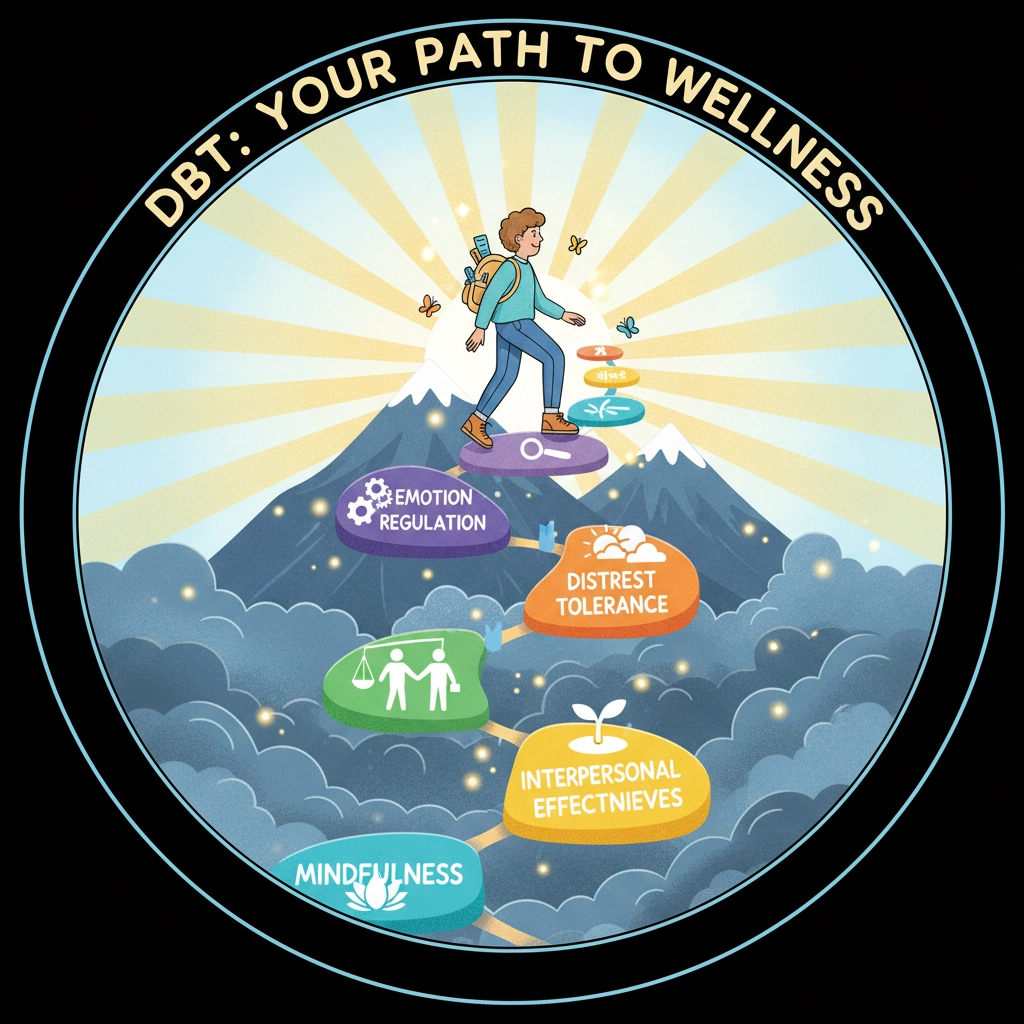
DBT breaks down into four main skill areas, and each one addresses something specific that people with anxiety and depression struggle with daily.
Mindfulness: Getting Out of Your Head
Mindfulness in DBT isn't about sitting cross-legged and chanting (though no judgment if that's your thing). It's about learning to observe your thoughts and emotions without getting swept away by them.
When anxiety hits, your mind often spirals into "what if" scenarios. Depression can trap you in loops of negative thinking. Mindfulness skills help you step back and notice what's happening without immediately reacting. It's like developing an internal pause button.
Emotion Regulation: Managing the Intensity
This is where DBT really shines for anxiety and depression. Emotion regulation skills teach you how to:
Identify what you're actually feeling (sometimes it's not as obvious as you'd think)
Understand what triggered the emotion
Reduce the intensity when feelings become overwhelming
Choose how to respond rather than just reacting
These aren't theoretical concepts: they're practical strategies you can use when your emotions feel out of control.

Distress Tolerance: Surviving the Storm
Life is going to be difficult sometimes. That's not pessimism; it's reality. Distress tolerance skills acknowledge this fact and teach you how to get through tough moments without making things worse.
Instead of turning to unhealthy coping mechanisms when you're overwhelmed, you learn techniques to ride out intense emotions safely. It's about building your capacity to handle life's inevitable challenges without falling apart.
Interpersonal Effectiveness: Better Relationships
Anxiety and depression often mess with relationships. You might withdraw from people, struggle with setting boundaries, or have difficulty expressing your needs. Interpersonal effectiveness skills help you navigate relationships more successfully, which can significantly impact your overall mental health.
Why People Are Getting Real Results
What sets DBT apart is that it gives you tools you can actually use. When you're having a panic attack at work, you have specific techniques to try. When depression makes everything feel hopeless, you have strategies to get through the day.
People report feeling more in control of their lives, not because their problems disappeared, but because they developed the skills to handle whatever comes up. That's a powerful shift.
The therapy also normalizes intense emotional experiences. If you've ever felt like you're "too sensitive" or that your emotions are "too much," DBT provides a different perspective: intense emotions aren't a character flaw: they're something you can learn to manage effectively.
The Group Component That's Making a Difference
Unlike individual therapy, DBT often includes a group skills training component. Don't worry: it's not about sharing your deepest secrets with strangers. The group focuses on learning and practicing skills together.
This format has unexpected benefits. You realize you're not alone in struggling with emotional intensity. You learn from others' experiences. You practice skills in a supportive environment. Many people find the group component just as valuable as individual sessions.
Who Should Consider DBT
DBT works particularly well for people who:
Feel emotions very intensely
Struggle with traditional talk therapy approaches
Want practical tools, not just insight
Deal with both anxiety and depression simultaneously
Have difficulty managing relationships due to emotional struggles
Feel like their emotions control their life rather than the other way around
If any of this sounds familiar, DBT might be worth exploring.
Getting Started: What to Expect
DBT isn't a quick fix: it's skill building, which takes time. Most programs run for several months, combining individual therapy with skills training. You'll learn techniques gradually, practice them in real-life situations, and build on your progress over time.
The investment is worth it because you're not just addressing current symptoms; you're developing lifelong skills for emotional wellness.
The Bottom Line
The reason everyone's talking about DBT is simple: it works. Not in a magical, cure-all way, but in a practical, build-real-skills way. It acknowledges that life is challenging and emotions are intense, then gives you the tools to handle both with greater ease.
If you're tired of feeling overwhelmed by anxiety or trapped by depression, if traditional approaches haven't given you the relief you're looking for, or if you want practical skills alongside therapeutic support, DBT might be exactly what you need.
The conversation around DBT reflects a shift in mental health treatment: from just understanding problems to developing concrete skills for living better. And that's definitely something worth talking about.
Ready to learn more about whether DBT could help you? Reach out to us to discuss your options and take the first step toward developing the emotional skills that could change your life.


Comments