
Does Your Church Really Need Mental Health Support? Here's the Truth
- Eugene Whitten
- Nov 18, 2025
- 4 min read

Let's cut straight to the chase: Yes, your church absolutely needs mental health support. Not as a "nice-to-have" or something to consider down the road, but as an urgent necessity that's already overdue.
The numbers don't lie, and neither do the stories from people sitting in your pews every Sunday who are quietly struggling with depression, anxiety, trauma, and other mental health challenges.
The Reality Check: Mental Health Is Already in Your Church
Here's what might surprise you: approximately 7.6 million Christians in the United States experience major depression each year. That's not counting anxiety disorders, PTSD, bipolar disorder, or any other mental health conditions.
In the UK, research found that 43% of surveyed Christians had experienced a mental health issue – significantly higher than the national average of 25%. Let that sink in for a moment. Nearly half of the Christians surveyed were dealing with mental health struggles.

But here's the kicker: despite these staggering numbers, 91% of church attendees report that their churches stigmatize mental health issues. Think about that disconnect. Almost half your congregation might be struggling, but over 90% feel like they can't talk about it openly.
The Gap Between Good Intentions and Reality
Most pastors have their hearts in the right place. About 89% of Protestant pastors say local churches have a responsibility to provide resources and support for people with mental illness. That's encouraging, right?
Well, not so fast. Here's where things get uncomfortable:
Only 46% of pastors report that their church regularly addresses mental illness
But just 12% of churchgoers say their church actually does this
Nearly half of pastors (49%) rarely or never speak about mental illness in sermons or large group settings
That's a massive gap between what church leaders think they're doing and what people in the pews are actually experiencing.
The Training Problem
Let's be honest about preparedness. While 30% of church leaders say they feel "very well-equipped" to help with mental and emotional health issues, 64% admit they feel only "somewhat equipped," and 6% acknowledge they're "not well-equipped" at all.
This isn't a criticism – it's reality. Seminary doesn't typically include extensive mental health training. Most pastors learn to counsel through experience, not formal education in psychology or mental health best practices.

And the numbers show it: only 23% of religious congregations actually offer any type of mental health programming. Think about that – less than one in four churches provides dedicated mental health support.
When Churches Get It Wrong
The consequences of inadequate mental health support in churches aren't just theoretical. They're real and often harmful.
About 30% of mentally ill Christian congregants who seek counsel from churches have counterproductive interactions. That means nearly one in three people who turn to their church for help with mental health issues actually have a negative experience.
Some of these negative experiences include:
Being told they don't actually have a mental disorder (41% in one study)
Being accused of demon possession
Being told their condition is the result of sin
Being abandoned or blamed for their illness (30% reported this)
These aren't isolated incidents. They're patterns that emerge when well-meaning church leaders lack proper training and understanding of mental health issues.
Why Churches Are Uniquely Positioned to Help
Despite these challenges, churches have something unique to offer in the mental health space. When people are in crisis, they often reach out to their priest, pastor, or spiritual leader first – before calling a therapist, doctor, or even family members.
Churches also reach people who might never access professional mental health care otherwise. For many, their church connection is their primary source of community support and guidance.

Faith and mental health aren't opposing forces. Recent research recognizes spirituality as a key dimension of mental health with proven positive impacts on well-being. The problem isn't that faith conflicts with mental health care – it's that many churches haven't learned how to integrate both effectively.
What Needs to Change
The good news? There's clear demand for change. About 64% of evangelical, fundamentalist, or born-again Christians believe churches should do more to prevent suicide. People want their churches to step up.
Here's what actually needs to happen:
Remove the Stigma: Churches need to openly discuss mental illness without shame or judgment. Mental health struggles aren't moral failures or signs of weak faith.
Provide Education: Congregations need basic mental health literacy. People should understand the difference between feeling sad and clinical depression, between worry and anxiety disorders.
Connect with Professionals: Churches don't need to become therapy centers, but they do need to know when and how to refer people to qualified mental health professionals.
Create Safe Spaces: People need to feel like they can share their struggles without being judged, dismissed, or given oversimplified spiritual solutions to complex problems.
The Integration Approach
The most effective approach isn't choosing between faith and mental health care – it's integrating both. This means:
Acknowledging that medication and therapy can be gifts from God
Understanding that prayer and professional counseling can work together
Recognizing that mental health issues are medical conditions, not spiritual deficiencies
Training church leaders to recognize when professional help is needed
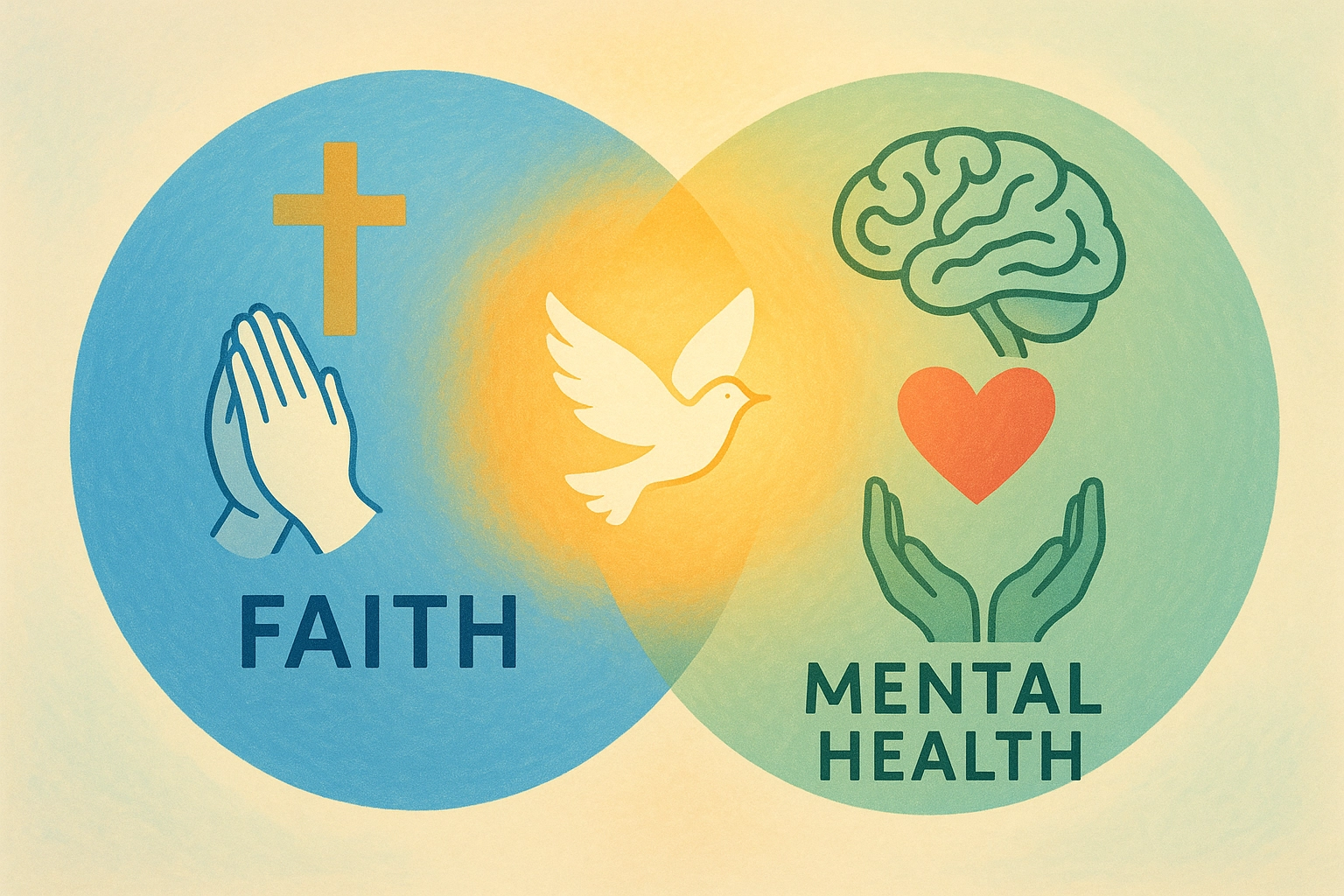
Some churches are already doing this well. They partner with licensed counselors, host mental health awareness events, and train their staff to recognize warning signs of serious mental health issues.
Moving Forward
Your church doesn't need to solve every mental health problem in your community. But it does need to stop inadvertently making things worse and start being part of the solution.
This might mean uncomfortable conversations, budget adjustments, and admitting that good intentions aren't enough. It definitely means getting educated about mental health and potentially changing how your church talks about and responds to psychological struggles.
The truth is, mental health support isn't an optional add-on for churches anymore. It's a basic pastoral care necessity. The people in your congregation are already dealing with these issues – the question is whether your church will be a source of help or an additional barrier to healing.
The choice is yours, but the need is undeniable. Your church – and the people who depend on it – deserve better than the status quo.
If you're struggling with mental health issues and need professional support, don't wait. Contact Abundant Life Counseling & Consulting to speak with a licensed counselor who understands the intersection of faith and mental health.


Comments