
Are Traditional Therapy Methods Dead? Do People Still Need In-Person Counseling?
- Eugene Whitten
- Nov 27, 2025
- 5 min read

Let's cut straight to the chase: No, traditional therapy methods are not dead. In fact, if you've been wondering whether people still need in-person counseling, the answer is a resounding yes.
Here's what might surprise you - after years of everyone talking about online therapy and digital mental health solutions, we're actually seeing a strong swing back toward face-to-face counseling in 2025. People are craving that human connection more than ever.
The Great Return to In-Person Therapy
Something interesting happened over the past year. While online therapy became mainstream during the pandemic and stayed popular for a while, mental health professionals are now reporting that clients are specifically asking for in-person sessions again.
We're talking about what some therapists are calling a "big shift" - people want that in-person connection without a screen between them and their counselor. It's not that online therapy failed or wasn't helpful. It's more like people tried it, appreciated the convenience, but realized something was missing.
Think about it this way: when you're dealing with anxiety, depression, relationship issues, or working through trauma, there's something powerful about being in the same room with someone who's trained to help you. The subtle cues, the energy in the room, the feeling that someone is truly present with you - these things matter more than we initially thought.

Why Online Therapy Isn't the Complete Answer
Don't get me wrong - research shows that online therapy works. Studies consistently prove it's just as effective as in-person care for most conditions, including anxiety, depression, and stress management. That's not the issue here.
The issue is that "effective" doesn't always equal "preferred" or "ideal." Many people found that while online therapy helped them, it didn't give them the full experience they needed to really dig deep and heal.
Here's what we've noticed in our practice: clients who started with online therapy often eventually ask to switch to in-person sessions, especially when they're ready to tackle deeper issues. There's something about the physical presence and the ritual of coming to a counseling office that helps people mentally prepare for the work they need to do.
Plus, let's be honest - screen fatigue is real. After spending all day on video calls for work, the last thing many people want is another screen-based conversation, even if it's therapeutic.
What Makes Traditional Therapy Irreplaceable
Traditional therapy methods have stuck around for decades because they work. Take Cognitive Behavioral Therapy (CBT), for example. This approach has been validated by over 2,000 clinical trials and continues to be one of the most effective treatments for depression, anxiety, OCD, and other conditions.
But it's not just about the techniques - it's about the human element. When you're sitting across from a skilled therapist, they can pick up on things that might get lost in a video call. Body language, energy shifts, the way you hold tension in your shoulders - these subtle signs help guide the therapeutic process in ways that technology simply can't replicate yet.
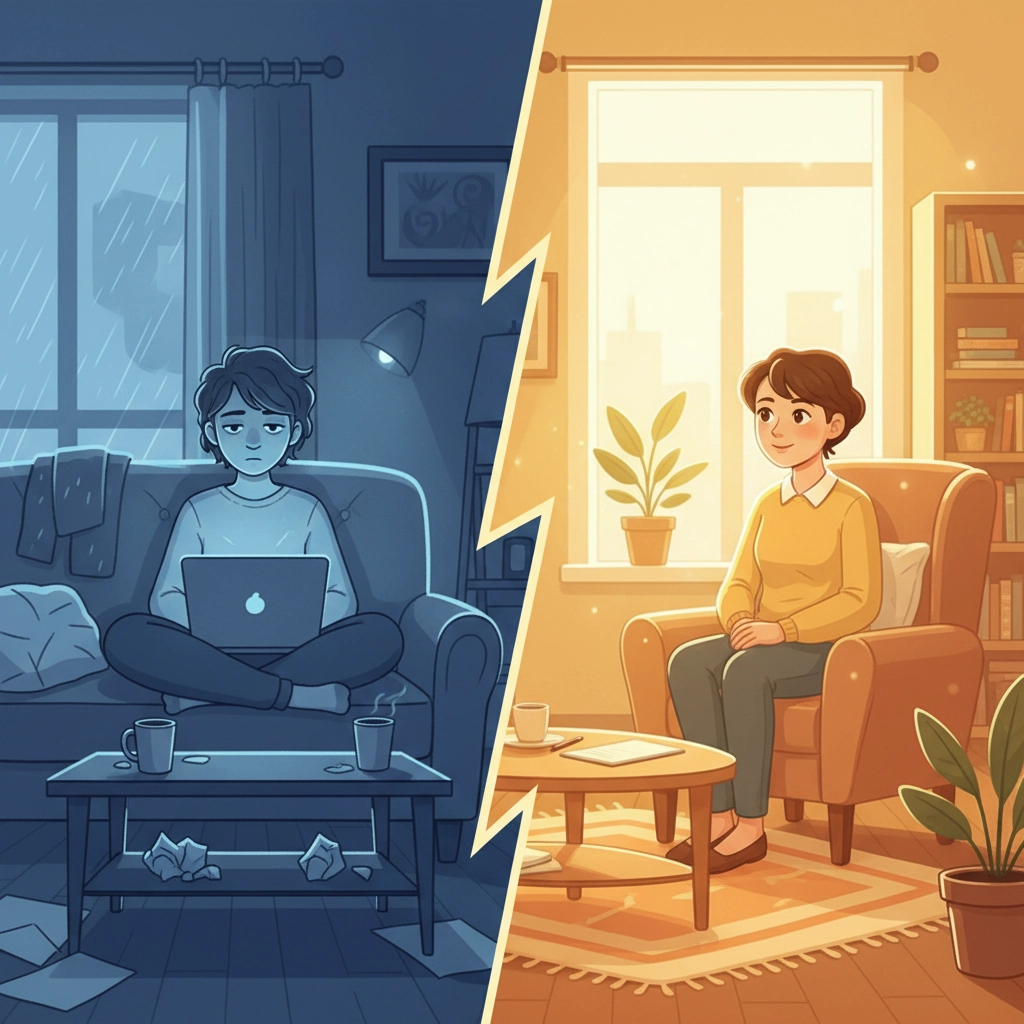
Traditional talk therapy also creates a unique space that's hard to recreate at home. When you walk into a counseling office, you're stepping into a space that's specifically designed for healing and growth. Your brain knows you're there to focus on your mental health, not multitask or worry about who might overhear your conversation.
The Rise of Hybrid Approaches
Here's where things get interesting: instead of choosing between online and in-person therapy, many people are discovering the benefits of hybrid care models. This means combining both approaches depending on what works best for different situations.
Maybe you do your regular weekly sessions in person, but use online sessions when you're traveling or going through a particularly busy period. Or perhaps you start online to get comfortable with therapy, then transition to in-person sessions when you're ready to dive deeper.
This flexibility is actually pretty revolutionary. It means you don't have to choose one approach and stick with it forever. You can adapt your therapy to fit your life, your comfort level, and your specific needs at any given time.
Traditional Methods Are Evolving, Not Dying
The mental health field isn't stuck in the past - it's constantly evolving while keeping the best of traditional approaches. Today's therapists are integrating proven methods like CBT and psychotherapy with newer approaches like mindfulness practices, art therapy, and even technology-assisted tools when appropriate.
What we're seeing is a more personalized approach to mental health care. Instead of a one-size-fits-all model, therapists are tailoring their methods to each individual client. Some people thrive with traditional talk therapy. Others benefit from more interactive approaches. The key is having options and skilled professionals who know how to use them effectively.

Why People Still Choose In-Person Counseling
Let's talk about why people specifically seek out in-person counseling, even when online options are available:
The ritual matters. Driving to your appointment, sitting in the waiting room, walking into your therapist's office - this routine helps your brain transition into "therapy mode." It's a clear boundary between your regular life and your healing time.
Non-verbal communication is huge. So much of human communication happens through body language, facial expressions, and energy that you just can't fully capture on a screen. Skilled therapists use these cues to better understand what you're going through and adjust their approach accordingly.
Fewer distractions. At home, there's always something - the dishes, your phone, family members, work emails. In a therapist's office, the focus is entirely on you and your healing process.
Safety and confidentiality feel more concrete. While online therapy can be secure, there's something about being in a professional, private space that makes people feel safer to open up about difficult topics.
What This Means for You
If you're considering therapy, here's the bottom line: you have more options than ever before, and traditional in-person counseling is very much alive and thriving. You don't have to settle for online therapy just because it's convenient or trendy.
Think about what you need. If you're dealing with complex trauma, relationship issues, or deep-seated patterns you want to change, in-person therapy might give you the best foundation for healing. If you have scheduling challenges or live in a remote area, online therapy could be a great starting point.
The most important thing is that you get the help you need in whatever format works best for you. And remember - you're not locked into one approach forever. You can always adjust as your needs change.
Looking Forward
Mental health care in 2025 is about integration, not replacement. Traditional therapy methods aren't just surviving - they're being enhanced by new tools and approaches while maintaining the human connection that's at the heart of healing.
Whether you choose in-person counseling, online therapy, or a combination of both, what matters most is finding a qualified professional who can help you navigate whatever you're facing. At Abundant Life Counseling & Consulting, we're here to support you in whatever format works best for your life and your healing journey.
The future of mental health care isn't about choosing between old and new - it's about having the wisdom to use the right approach at the right time for each unique person.


Comments